What is a Lip Lift?
A lip lift is a structural procedure that I use regularly in facial plastic surgery practice, either alone or as an adjunct to a deep plane facelift. It is designed to correct vertical excess of the upper lip and improve:
Tooth show (how much of the front teeth show)
Vermilion display (the pink part of the lip)
Overall lip proportions
Unlike fillers, which add volume, a lip lift addresses length and position.
It is therefore best suited for patients with a long upper lip, poor incisor show, or age-related elongation of the lip.
Importantly, the result is structural and stable over time, unlike fillers.
How I Decide: Measurements Matter
A lip lift is not based on preference but on proportions.
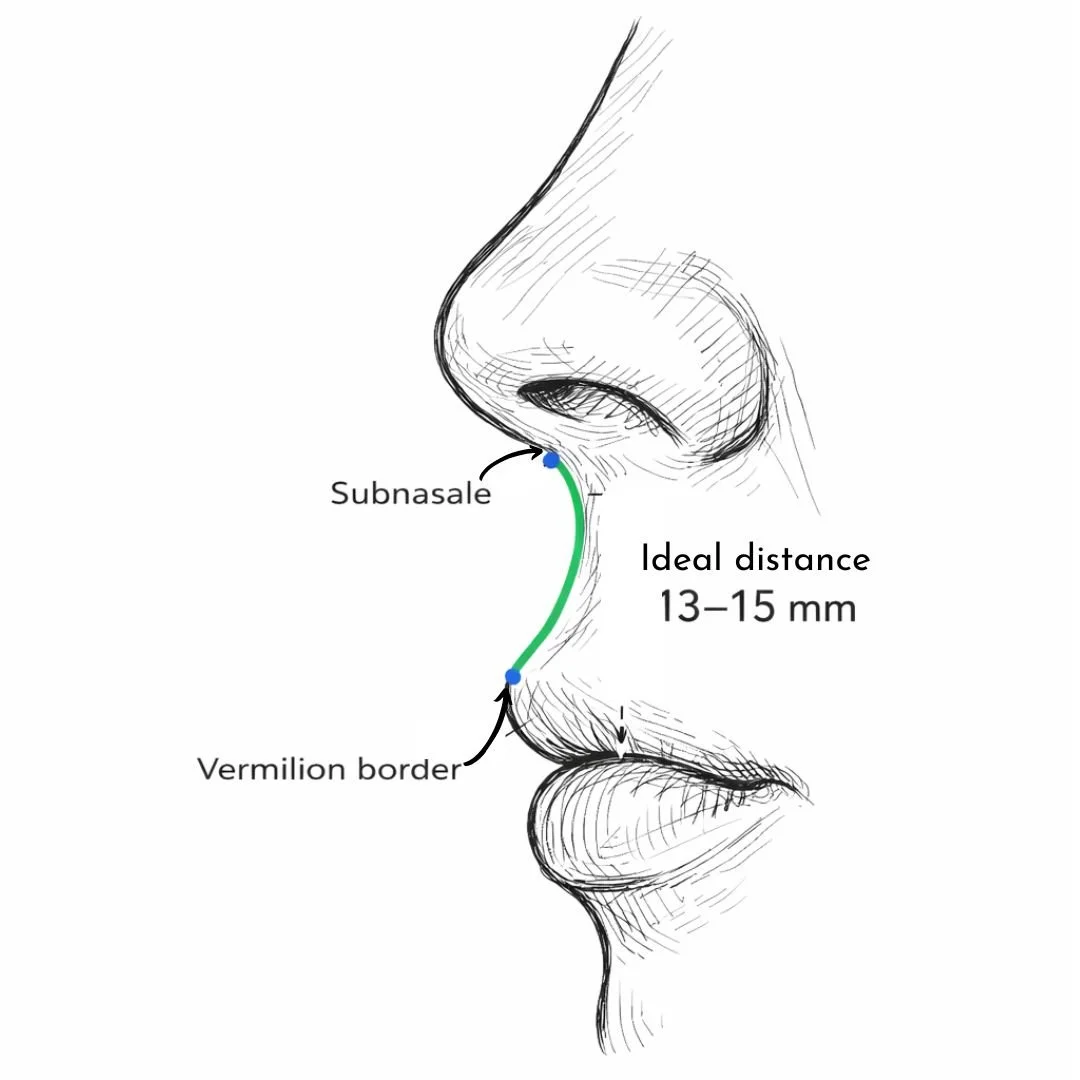
Subnasale to Vermilion Border Distance
This is the most important measurement.
Ideal range: 13–15 mm
Values above this suggest vertical excess of the upper lip
When this distance is too long, the lip tends to look flat, elongated, and less defined.
Maxillary Incisor Show at Rest
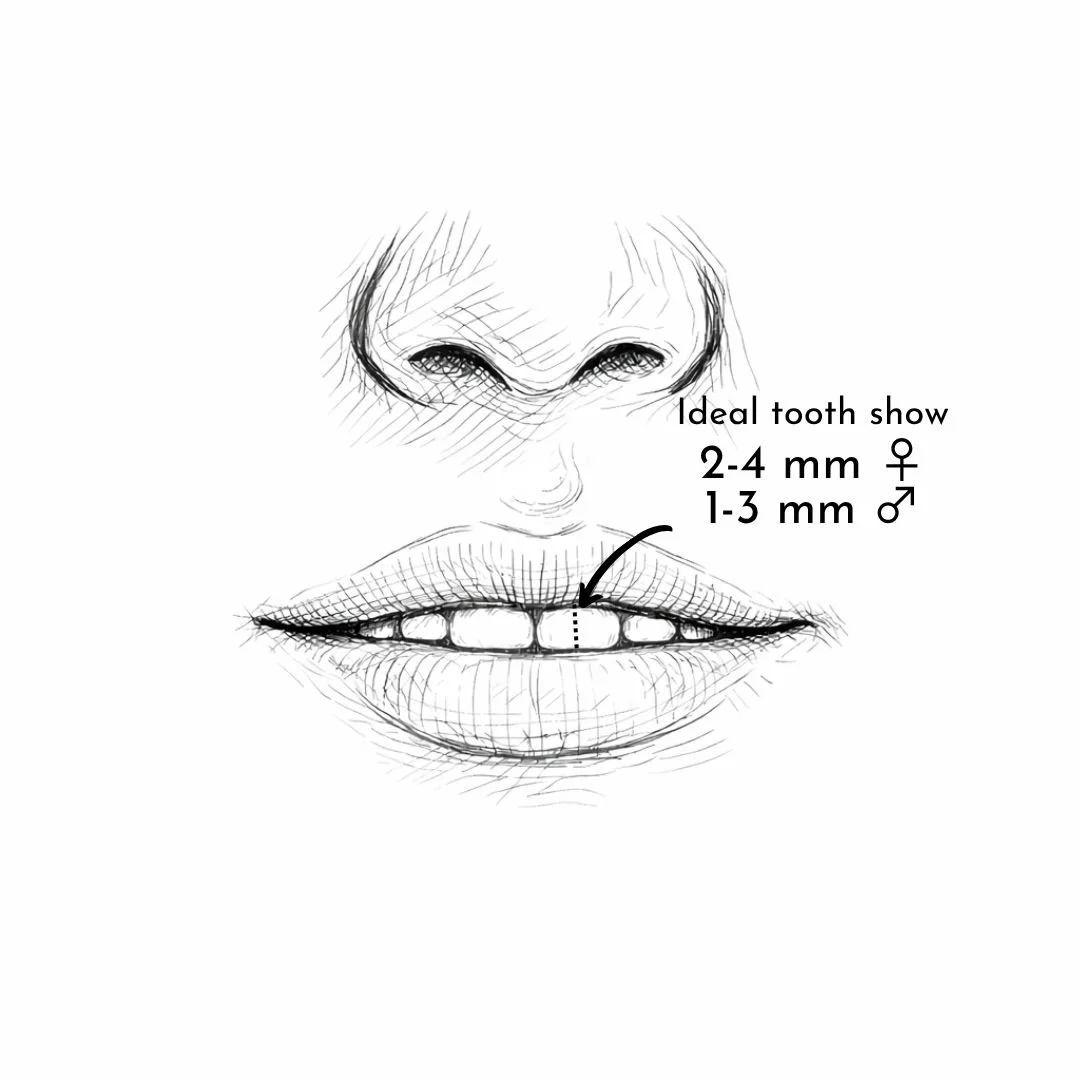
Ideal:
2–4 mm in women
1–3 mm in men
Little or no tooth show at rest is a strong indicator that the lip may be too long and would benefit from shortening.
Vermilion Height and Definition
A lip lift works by everting the lip slightly (flipping it upwards), which:
Increases visible vermilion
Improves definition
Restores curvature
This is particularly useful in patients with thin or flattened lips due to elongation, not just volume loss.
You may be a good candidate for a Lip Lift procedure if you have:
A long upper lip (increased philtral length)
Minimal or absent tooth show at rest
A thin or deflated upper lip with aging
Limited or unnatural results from repeated fillers
A desire for a permanent structural solution rather than temporary volume
When to Be Careful
A lip lift is not appropriate in every case.
Short upper lip → risk of over-shortening
Long teeth: If your teeth are already fully visible, lifting the lip further can create an unnatural or "toothy" appearance
Excessive gum show (gummy smile) that is due to a long maxilla (tooth-bearing bone) → more teeth visible
Poor scarring tendency or unfavorable nasal base anatomy
Younger patients may have more visible scars
Unrealistic expectations, especially regarding fullness
Surgical Technique
Subnasal (Bullhorn) Lip Lift
The most common approach is a subnasal lip lift, where a small amount of skin is removed just beneath the nose.
Key principles:
Conservative excision, typically 4–6 mm
Precise symmetry is critical
The incision follows the natural contour of the nasal base to minimize visibility
In some cases, a corner lip lift may be added to address downward-turning corners.
What Does a Lip Lift Actually Do?
Shortens the upper lip
Increases tooth show
Enhances vermilion display
Improves lip shape and curvature
Lip Lift vs Fillers
Fillers and lip lifts treat different problems.
In a long upper lip, fillers can lead to:
Heaviness and hiding of the front teeth
Blunting of the vermilion border
Unnatural projection
Using fillers to “flip” the lip does not work. A lip lift restores proportion first; if needed, small amounts of filler can then be used more effectively.
Final Thoughts
A lip lift is a measurement-driven procedure, not a trend.
The best results come from:
Careful analysis and measurements
Respect for anatomy and good indications
Conservative execution (you can always excise more)
In properly selected patients, it provides a natural and long-lasting improvement in lip position and facial balance, something that volume alone cannot achieve.