Why I use the Deep Plane Facelift
Why Do Some Surgeons Prefer the Deep Plane Facelift?
Whether I am seeing patients in Beirut or Dubai, the question is often the same: why do I prefer the deep plane facelift?
The short answer is simple: I believe facial aging occurs in the deeper tissues of the face, not just in the skin.
As we age, the cheeks descend, the jawline loses definition, the neck becomes heavier, and folds deepen. Tightening skin alone does not fully address these changes because the structures that have moved are deeper.
The deep plane facelift releases key retaining ligaments and repositions the descended facial tissues directly. This allows restoration of the cheeks, jawline, and neck with less reliance on skin tension, often producing a more natural result.
What Does a Deep Plane Facelift Treat?
The deep plane facelift is designed to improve:
Jowls and loss of jawline definition
Neck laxity and platysmal bands
Midface descent
Deep nasolabial folds
Marionette lines
Treating the Cause, Not the Consequence
One of the things I like about the deep plane facelift is that it allows me to work directly on the tissues that have descended over time.
By releasing key retaining ligaments and repositioning the deeper facial tissues, I can restore the cheeks, jawline, and neck without relying primarily on skin tension.
For me, this is one of the reasons deep plane facelifts tend to look more natural. The face doesn't look pulled. It simply looks less affected by gravity.
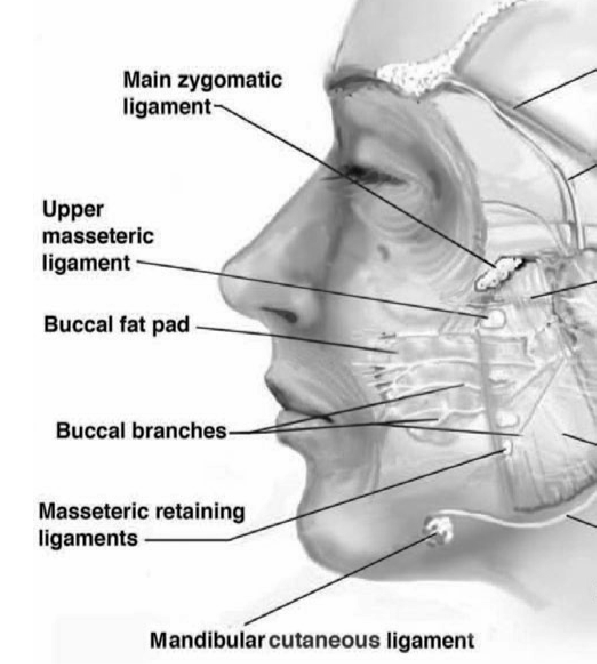
Alghoul, Mohammed S. and Mark A. Codner. “Retaining ligaments of the face: review of anatomy and clinical applications.” Aesthetic surgery journal 33 6 (2013): 769-82 .
What are these retaining ligaments?
These retaining ligaments anchor the skin and soft tissues to the deeper structures of the face, whether bone or muscle.
With gravity and repeated facial animation, they gradually elongate and become less effective restraints to soft tissue descent. This contributes to many of the classic signs of facial aging: heavier cheeks, deeper nasolabial folds, jowls, and loss of jawline definition.
While facial aging is multifactorial and deep volume loss does play a role, I believe tissue descent is often a more important contributor than many patients realize.
The video below exaggerates the effect of gravity, but it provides a useful illustration of what happens when facial tissues lose support over time.
For me, this is one of the reasons deep plane facelifts tend to look more natural. Rather than relying primarily on skin tension, the descended tissues are repositioned closer to where they used to be.
The face doesn't look pulled. It simply looks less affected by gravity.
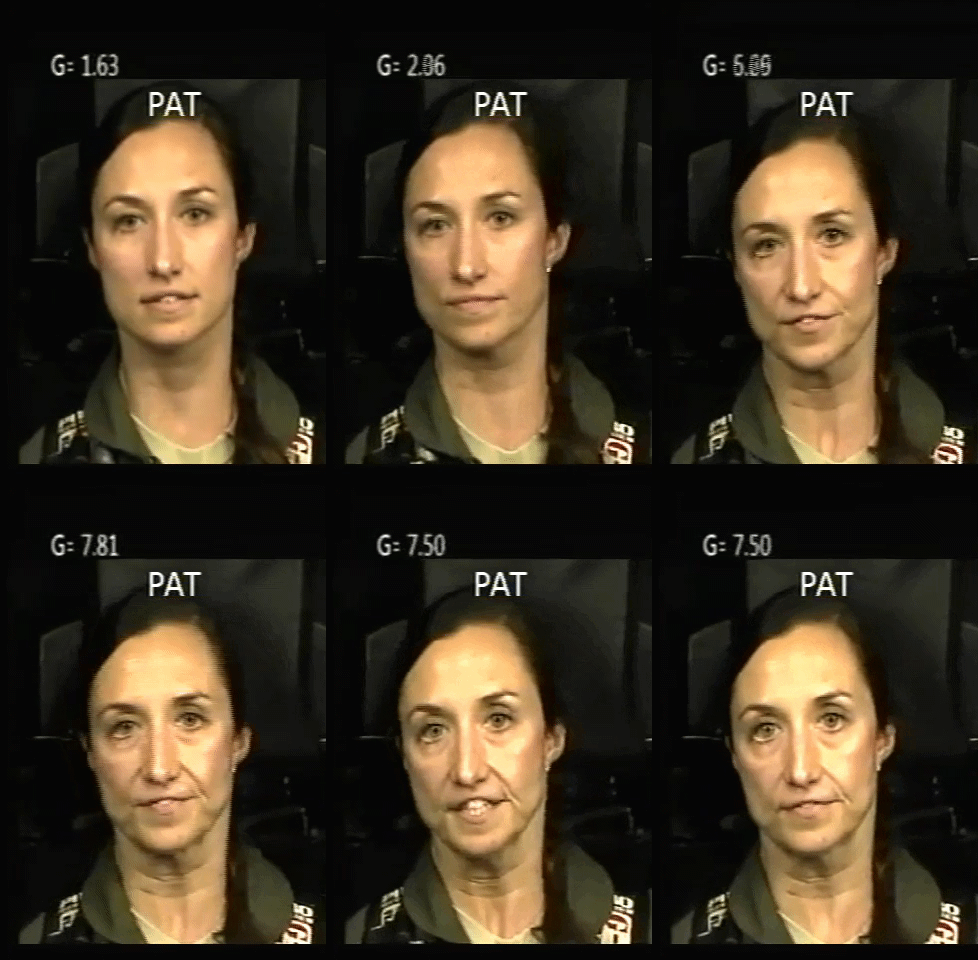
Gravity’s effect on facial aging
G-force training exaggerates the effect of gravity on the face, temporarily demonstrating how soft tissues descend when supporting structures are placed under increased load. Facial aging is more complex than gravity alone, but this provides a useful illustration of tissue descent over time.
The Midface Is Often Forgotten
As the malar fat pad of the cheek descends over time, it contributes to heaviness around the nasolabial fold and gradually changes the shape of the face from an oval to a more square appearance.
One of the advantages of the deep plane technique is that it allows me to release and reposition these tissues in the inner cheek directly rather than trying to compensate for them through skin tightening alone.
It's Not About the Name of the Procedure
Deep plane facelifts have become extremely popular online, and sometimes it sounds as though the name of the operation is more important than the surgery itself.
I don't think that's true.
A good result depends on patient selection, surgical planning, tissue handling, and understanding facial anatomy. The technique is important, but it is only one part of the equation.
Not Every Patient Ages the Same Way
Some patients need significant neck work. Others benefit from fat grafting, eyelid surgery, brow lifting, lip lift or skin resurfacing in addition to a facelift.
There is no single operation that treats every face.
The consultation is often more important than the procedure itself because it helps determine where the aging process is occurring and what combination of treatments will address it.
My Philosophy
The best facelift is not the one that gets noticed.
It's the one that restores definition to the jawline, softens the jowls, improves the neck, and refreshes the face without changing what makes someone look like themselves.
That's why I use the deep plane facelift. Not because it's fashionable, but because I believe facial aging occurs at the level of the retaining ligaments and deeper facial tissues. By releasing and repositioning those structures directly, I can restore support where it has been lost rather than simply tightening what has become loose.
-
Both procedures address the deeper tissues of the face rather than simply tightening skin.
The main difference is that a deep plane facelift releases key retaining ligaments and mobilizes the skin and SMAS as a single unit. This allows the descended tissues to be repositioned more directly, particularly in the cheek and midface.
The best technique depends on the patient's anatomy and the surgeon's experience.
-
Yes.
A deep plane facelift can significantly improve jawline definition and neck contour by repositioning the descended facial tissues.
However, patients with significant neck laxity, excess fat, or prominent platysmal bands often benefit from additional neck work performed at the same time.
-
No facelift stops the aging process.
However, because a deep plane facelift repositions deeper structures rather than relying primarily on skin tension, the results are generally long-lasting (10-15 years).
Most patients continue to look younger than they would have without surgery for many years after the procedure.
-
Not always.
A facelift primarily addresses tissue descent, while fat grafting addresses volume loss.
Some patients require only a facelift, while others benefit from a combination of deep plane lifting and structural fat grafting to achieve the most balanced result.escription
-
The best candidates are patients with visible facial descent, including jowls, loss of jawline definition, neck laxity, and midface heaviness.
The decision is made during consultation after evaluating facial anatomy, skin quality, volume loss, and overall treatment goals.